
How to Keep a Wood Door From Warping — A Woodworker's Guide
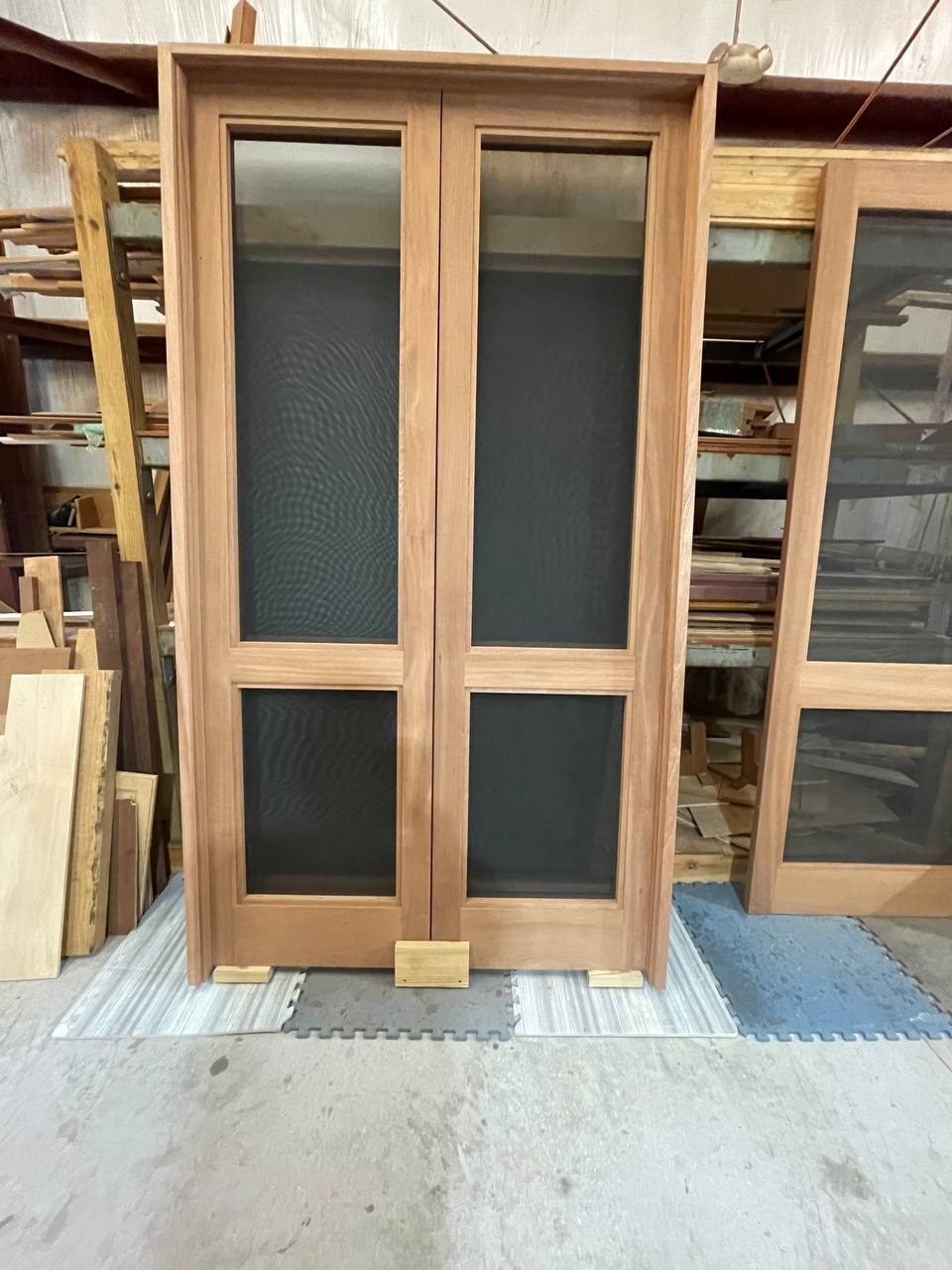
Seal all six sides of the door — both faces and all four edges, especially the top and bottom — with at least two coats. Keep that finish up (re-oil once or twice a year), give the door an overhang or a screen door if you can, and start with a stable wood. Do that and a well-built door stays flat for decades.
If your door sticks every summer and swings fine every winter, it isn't the hinges — it's the wood moving. Here's what's actually going on, and how we keep it from happening.
I've been building doors for a long time, and warping is the number-one thing folks ask me about. The good news is it's almost always preventable. Wood warps for one simple reason, and once you understand it, the fixes make sense. Let me walk you through it the way I'd explain it to somebody standing in the shop.
Why wood doors warp in the first place
Wood is always trading moisture with the air around it. It swells when it's damp and shrinks when it's dry — that part you can't stop, and you don't need to. The trouble starts when one side of the door takes on moisture faster than the other.
Think about an exterior door. The inside face lives in your air-conditioned house — dry and steady. The outside face takes the heat, the rain, and our Lowcountry humidity. When the outside swells and the inside doesn't, the door cups or bows. That's a warp. It's not bad luck and it's not always bad wood — it's usually a moisture imbalance nobody sealed against.
Seal all six sides — the step everybody skips
This is the big one. A door has six surfaces: two faces and four edges. Most people finish the two faces they can see and hang it. The problem is the top and bottom edges — that's raw grain, and it drinks up water faster than anywhere else on the door. The top edge you never see, so it never gets touched, and it quietly pulls moisture in for years.
Before a door goes up, seal every surface:
- Both faces, both long edges, and — this is the one — the top and bottom edges
- At least two coats, and don't rush them; let each one cure
- Pay extra attention to any cutouts for glass, screens, or hardware — those exposed edges soak up water too
When we finish a door in our shop, it leaves sealed on all six sides and ready to hang. That's not us being fussy — it's the single biggest thing that keeps a door flat.
Keep the finish up
A finish isn't forever. Sun and weather wear it down, and once it thins out, the wood is exposed to moisture again. You don't have to baby it, but you do have to keep after it:
- Give exterior doors a fresh coat of oil or sealer once or twice a year, more if it faces due south or west and takes full sun
- Watch for the warning signs — a dull, chalky, or gray look, water no longer beading, or the door starting to stick
- A light re-oil is a 30-minute job; a full refinish after you've let it go is a weekend
Give it some shelter
The less raw weather a door takes, the longer it stays true. You can't move the house, but you can help:
- An overhang, porch, or storm/screen door takes the brunt of the sun and rain — this alone makes a huge difference on a west-facing entry
- Go easy on very dark colors in full sun; a dark door in direct afternoon light can get hot enough to stress the finish and the wood
- Make sure water sheds away and isn't pooling at the threshold against that vulnerable bottom edge
Start with the right wood
All the sealing in the world can't fully save a door built from cheap, unstable stock. Some woods just move more than others. For exterior doors you want something dense and dimensionally stable — cedar, white oak, and Douglas fir are all reasonable.
We build primarily in Sapele, and there's a reason. It's an African hardwood that stays dead straight, resists moisture, and holds up beautifully outdoors — exactly what a door needs in a humid coastal climate like ours. Pair a stable wood like that with proper sealing and a door will outlast the trends. That's the whole idea behind built by hand, made to last.
Can you fix a door that's already warped?
Sometimes. A mild cup can often be coaxed back — lay the door flat, add even weight or clamps over the high spots, give it time, and then seal every side so it stops moving on you. The sealing is the part people forget; if you flatten it and leave the edges raw, it'll just warp again.
A door that's badly twisted, or one that's soft and rotting at the bottom edge, is usually past saving — and honestly you're better off with a new one built and sealed right from day one. That's the kind of thing we can help with.
Common questions
Why do wood doors warp?
Because moisture moves into one side faster than the other. The inside face stays dry in the conditioned house while the outside face takes humidity and rain, so the two sides swell differently and the door cups or bows. Unsealed edges and a worn finish are the usual causes.
What's the best wood for an exterior door that won't warp?
A dense, dimensionally stable hardwood. Sapele is one of the best in a humid climate — it stays straight and resists moisture. Cedar, white oak, and Douglas fir are also solid choices. How the door is built and sealed matters just as much as the species.
Do you really have to seal the top and bottom edges?
Yes — it's the step most people skip and the reason most doors warp. Those edges are raw grain that soak up moisture fastest. Seal all six sides with at least two coats before the door is hung.
Can a warped door be fixed?
A mild warp can sometimes be relaxed by clamping it flat over time and then sealing every side. A badly twisted or rotted door is usually better replaced with one built correctly from the start.
Need a door built to take the Lowcountry weather?
We build handcrafted Sapele doors, custom-sized and sealed to last — right here in Ravenel. Tell us what you have in mind.
Request a Custom Piece More from the bench →