
How to Pick Good Lumber at the Store — A Beginner's Guide to Not Buying a Bad Board
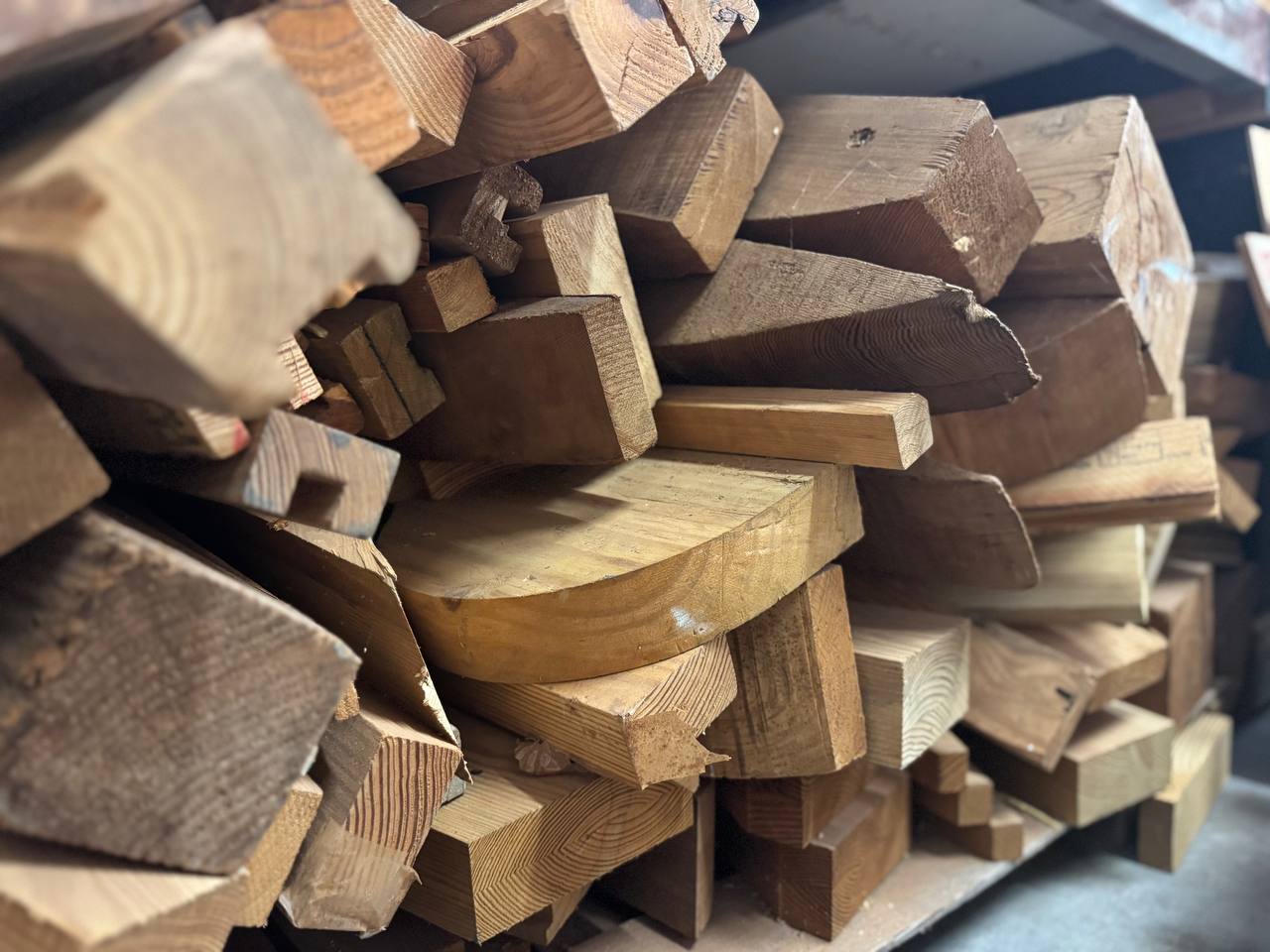
Pick up one end of the board, hold it near your eye, and sight straight down the length like you're aiming a rifle. Do it on all four faces. If it looks straight from every side, it is. Then check the ends for cracks, buy kiln-dried stock, and expect to pull eight boards to find three good ones. That's not being picky — that's the job.
Most projects that go wrong went wrong at the lumber rack, before anybody made a single cut.
I've had people bring me a bench or a table they built that came out twisted, and they want to know what they did wrong with the joints. Usually nothing. They bought a bad board. You can be careful with every cut you make and it won't save you, because a board that wants to move is going to move, and it'll take your project with it.
The good news is that picking lumber is a skill you can learn in about fifteen minutes standing at the rack. Here's how I'd walk you through the stack if you were next to me.
Sight down the board — every single one
This is the whole ballgame. Stand one end of the board on the floor, tilt the other end up near your eye, and look straight down the length of it. Your eye is remarkably good at this. A straight line looks straight, and a curve jumps right out.
Then roll the board a quarter turn and do it again. All four faces. It takes about ten seconds a board once you get the rhythm, and it catches more problems than any other single thing you can do.
What you're looking for has names, and the names are worth knowing because they tell you how bad the problem is:
- Bow — a curve along the length of the flat face. The board rocks like the runner on a rocking chair. Mild bow is often fixable if the board gets fastened down flat
- Crook (some folks say crown) — a curve along the length of the edge, so the board looks like a banana lying on the floor. Annoying, but usable if you cut it into shorter pieces
- Cup — a curve across the width, so the face is dished like a shallow gutter. Common on wide boards. It can sometimes be flattened, but a badly cupped board is a fight
- Twist (also called wind) — the four corners don't sit in the same plane and the board wants to spiral. Walk away from twist. It's the hardest to correct and the most likely to ruin what you build
If I can only avoid one defect, it's twist. A bowed board can be talked into behaving. A twisted board argues with you until the day it comes apart.
Check the ends before anything else
The ends of a board dry faster than the middle, so they're where trouble shows up first. Look at both ends of every board you're considering:
- End checks — small cracks running in from the end, following the growth rings. Very common. Usually you just cut a few inches off and move on, so factor that into the length you buy
- Splits that run deep — if a crack runs a foot or more into the board, put it back. You're paying for wood you can't use
- The growth rings — rings that run more or less straight across the end (quartersawn) stay flatter than rings that arc across it (flatsawn). Flatsawn is what most store lumber is, and it's fine, but it's more likely to cup, and it'll cup away from the arc
Kiln-dried versus green — pay the difference
Wood is a sponge. It takes on and gives off moisture until it comes into balance with the air around it, and as it does, it shrinks and swells. Green lumber is still full of water. Build with it and your project will do its drying after it's assembled — which shows up as gaps, cracks, and warping in a piece you already finished.
Kiln-dried stock has already done most of that moving under controlled conditions. Interior work generally wants wood in the neighborhood of 6 to 8 percent moisture content; exterior work runs higher, roughly 9 to 14 percent. You don't need a meter to be a homeowner buying a few boards — you just need to buy dry stock and let it settle.
One thing that catches people: pressure-treated lumber is usually wet. It comes off the truck heavy with treatment solution. Unless the tag says KDAT — kiln-dried after treatment — expect it to shrink as it dries. That's why a brand-new deck can show gaps by the end of its first summer.
A 2x4 is not two inches by four inches
Every beginner gets bitten by this once. The number on the tag is the nominal size — the rough dimension before the board was dried and surfaced. What you actually take home is smaller:
- A 2x4 is 1 1/2" × 3 1/2"
- A 1x6 is 3/4" × 5 1/2"
- A 2x10 is 1 1/2" × 9 1/4"
It's consistent, so it's easy to work with once you know. But measure off the real dimension, not the label. I've seen more than one project come up an inch and a half short because somebody did the math off the sticker.
Knots, wane, and the stuff that's only sometimes a problem
Not every flaw is a dealbreaker. Part of picking lumber well is knowing what you can live with:
- Tight knots are usually fine and often good-looking. They're locked in and they're not going anywhere
- Loose or black-ringed knots will fall out eventually and leave a hole. Avoid them anywhere they'd be structural or visible
- Wane — the rounded edge with bark or missing material where the board came off the outside of the log. Cheap for a reason. Fine for rustic work, not for anything that needs a crisp edge
- Pitch pockets and bug holes — put those boards back. You don't need the trouble
- Stain and discoloration — cosmetic if you're painting, a real issue if you're staining or oiling
Also: pull from the middle of the stack, not the top. Top boards catch the sun through the skylights and take the abuse of every forklift and every customer. The good stuff is usually two or three deep.
Pulling eight boards to keep three is normal
People get self-conscious about this. Don't. Nobody at the store cares, and anybody who works with wood does exactly the same thing. Just restack what you don't take — leave the pile the way you found it, and you'll never get a word about it.
Buy 10 to 15 percent more than your cut list calls for. You'll lose some to end checks, some to a knot in the wrong place, and some to a board that looked fine at the store and looked different in your garage. Running short in the middle of a project is worse than having a couple of extra boards on the rack.
The Lowcountry part: let it sit before you build
This is where living around Charleston changes the advice. Our air is wet most of the year, and wood responds to that. A board that came out of a climate-controlled warehouse can pick up moisture fast once it's sitting in your garage — and as it does, it moves.
So don't buy lumber on Saturday morning and start cutting Saturday afternoon. Sticker it and let it acclimate for a few days — lay the boards flat with some scrap between the layers so air gets to all four sides, somewhere close to the conditions the finished piece will live in. Then sight them again before you cut. Some of them will have moved, and you'd much rather find that out now than after everything's glued up.
It's the same principle behind keeping a wood door from warping — down here, moisture is the thing that decides how long your work lasts, and it doesn't stop mattering after you've built the thing.
A short version to take to the store
- Sight down all four faces of every board. Reject twist without thinking about it
- Check both ends for checks and deep splits
- Buy kiln-dried. Assume pressure-treated is wet unless the tag says otherwise
- Measure off actual dimensions, not the 2x4 label
- Tight knots are fine; loose knots are holes waiting to happen
- Pull from the middle of the stack, buy 10-15% extra, restack what you leave
- Let it acclimate a few days in your garage before you cut
Common questions
How do you tell if a board is warped?
Stand one end on the floor, hold the other end near your eye, and sight down the length like you're aiming a rifle. A straight board looks straight. Roll it and do all four faces. It takes ten seconds a board and it catches nearly everything.
What's the difference between bow, cup, crook and twist?
Bow curves along the length of the face, so the board rocks. Crook curves along the length of the edge, so it looks like a banana lying flat. Cup curves across the width like a shallow gutter. Twist means the four corners don't sit in the same plane. Twist is the hardest to fix and the one worth walking away from.
Is kiln-dried lumber worth the extra money?
For anything you want to stay flat, yes. Green lumber is still full of water and it will shrink and move after your project is built. Kiln-dried has already done most of that moving. Pressure-treated is usually wet unless the tag says kiln-dried after treatment — that's why new decks show gaps in their first summer.
Why isn't a 2x4 actually 2 inches by 4 inches?
That's the nominal size — the rough dimension before drying and surfacing. A 2x4 is really 1 1/2" × 3 1/2", a 1x6 is 3/4" × 5 1/2". It's consistent, but build your measurements off the real number or you'll come up short.
Picking the boards is half the job
If you'd rather somebody with thirty years at the bench do the picking — and the building — that's what we're here for. Doors, gates, and custom work, made by hand in Ravenel.
Request a Custom Piece More from the bench →