
Do Wood Doors Hold Up in Charleston? The Truth About Salt Air, Humidity, and a Real Hardwood Door
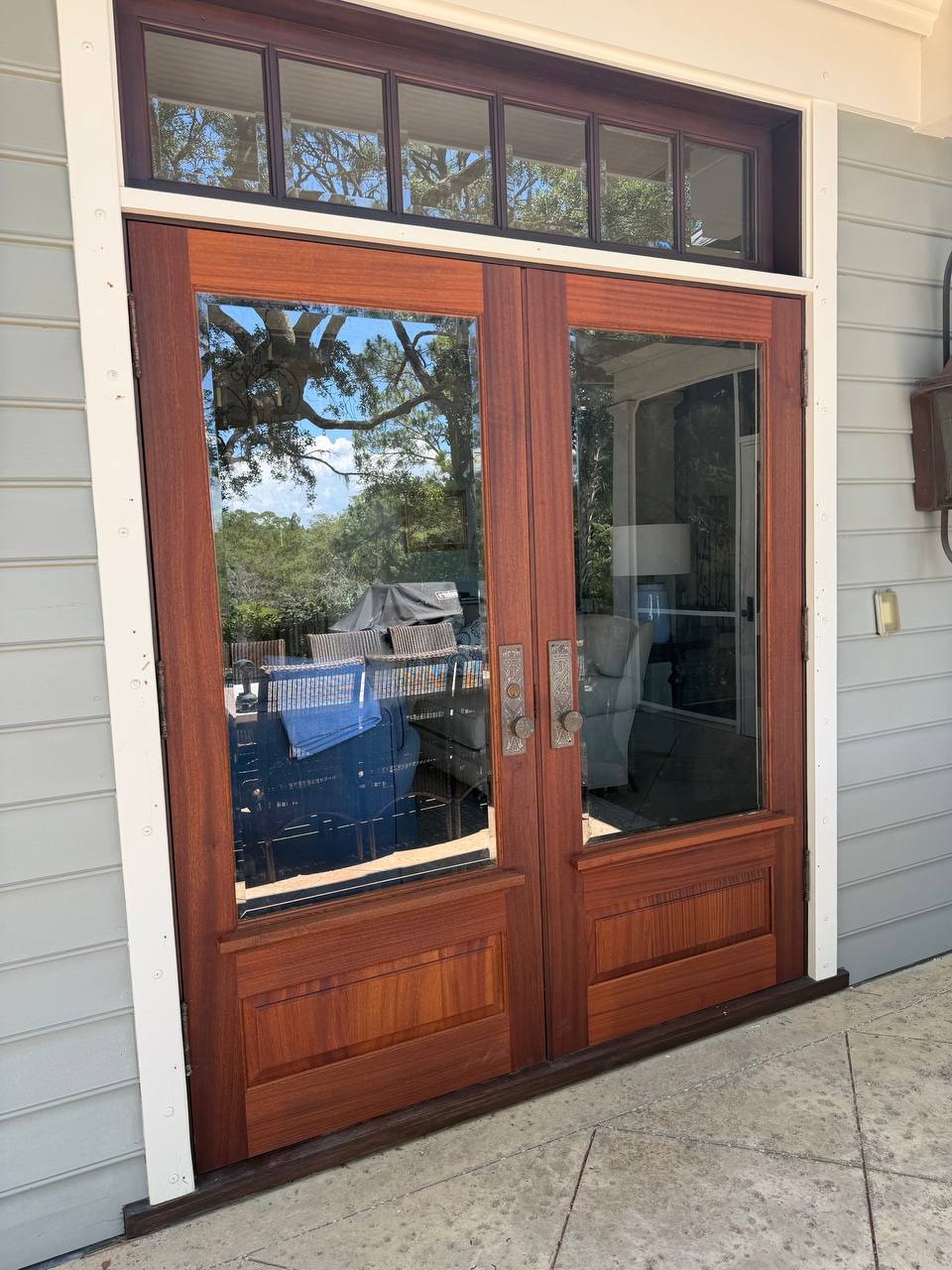
Yes — but not every wood door. A big-box pine or fir door will swell, stick and rot in Lowcountry air. A dense, naturally rot-resistant hardwood like Sapele, sealed on every surface and kept finished, holds up here for decades. Charleston sits above 70% humidity most of the year, and that punishes cheap material. It doesn't punish good material the same way. The real question isn't wood versus something else — it's which wood, and whether you'll keep after it.
Ask around town about a wood front door and somebody will tell you not to bother. I want to give you a straighter answer than that.
I hear this question almost every week, and it's usually phrased the same way: "I love the look, but won't it fall apart down here?" Somebody has already told them it will. Look up "front door" and "Charleston" and you'll find a stack of pages saying more or less the same thing — that wood is period-correct and the review boards like it, but it swells and rots in Lowcountry humidity and demands the most upkeep of anything you can buy.
Here's the thing. Most of that is accurate. It's just describing a different product than the one I build.
"Wood door" is not one product
This is where the whole argument goes sideways. We use one word — wood — for materials that behave nothing alike.
A stock exterior door off a lumberyard rack is usually a softwood: pine, fir, hemlock, sometimes a thin veneer over a composite core. That's a fine door in Ohio under a covered porch. Put it on a Lowcountry entry and you get exactly what everybody's warning you about. It drinks moisture, it moves, the panels crack, the bottom rail goes soft, and in five or six years you're shopping again.
A dense tropical hardwood is a different animal. Same word on the label. Not the same product, not the same lifespan, not remotely the same price of ownership over thirty years. Judging all wood doors by the cheap one is like judging all trucks by the one that was already rusted out when you bought it.
What actually makes a wood hold up in this climate
There are only three things that matter, and you can check all three before you buy:
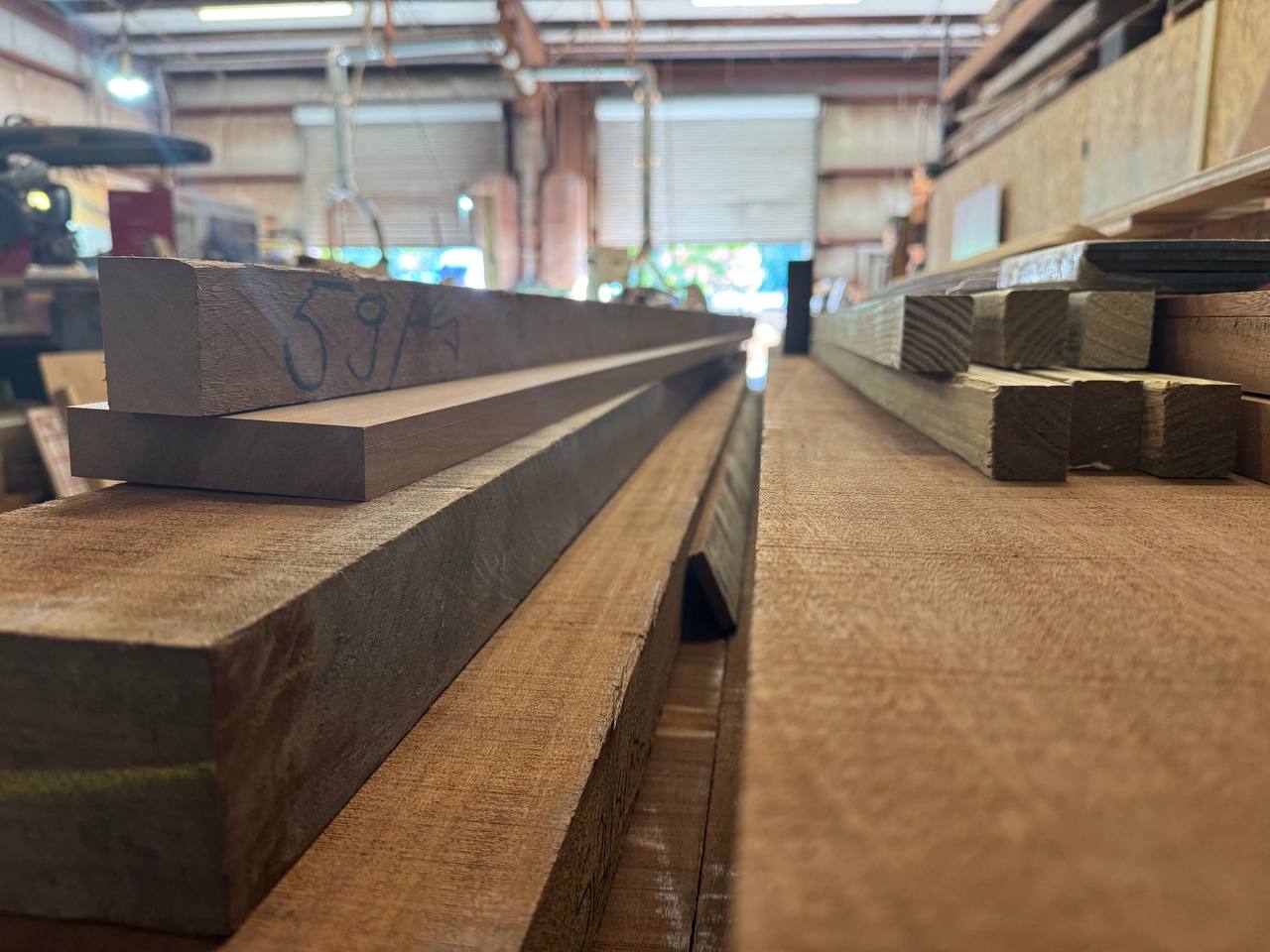
- Density. Harder, tighter wood takes on moisture more slowly and dents less. Sapele runs about 1,410 lbf on the Janka hardness scale. Genuine mahogany is around 800–900. Common softwood door stock is lower still. That gap is not cosmetic — it's the difference between a door that shrugs at a wet August and one that swells into the jamb
- Natural decay and insect resistance. Some species produce compounds that rot and bugs don't care for. Sapele has good natural resistance to both. That's not a coating you can add later; it's in the wood
- Grain structure. Sapele grows with an interlocked grain — the fibers alternate direction as the tree grows. Practically, that means it resists splitting where hardware bites in, at the hinge screws and the lock. Those are the two spots where a door usually starts coming apart
None of that makes wood magic. Sapele is generally rated moderately durable in fully exposed outdoor conditions — meaning it does well, and it still wants a finish over it. Anybody who tells you a wood door is maintenance-free is selling you something, and it isn't a wood door.
Humidity and salt air are two different problems
People lump these together and they shouldn't, because they attack different things.
Humidity is a wood problem. Wood is a sponge — it takes on and gives off moisture until it balances with the air around it, and it swells and shrinks doing it. That's what makes a door stick in August and swing loose in January. The answer is dense stock and a finish that covers every face, including the top and bottom edges. An unsealed bottom edge is the single most common reason a good door fails early. I've written more about that in keeping a wood door from warping.
Salt air is mostly a metal problem. Salt corrodes. If you live out toward Folly, Sullivan's, Kiawah or Seabrook, the thing that's going to fail first isn't the wood — it's cheap hinges, a hollow-core handle set, or a builder-grade lockset gone green and gritty. Spend on solid stainless or bronze hardware. I've seen beautiful doors get blamed for what was really a twelve-dollar hinge.
What it honestly asks of you
I'm not going to tell you it's nothing. Here's the real list:
- Rinse or wipe the salt film off a few times a year if you're near the water. Plain water and a soft cloth. That's it
- Look the finish over twice a year — spring and fall. You're checking whether it still looks wet and even, or whether it's gone chalky and thin. Pay attention to the bottom rail and whichever side takes the afternoon sun
- Refresh the exterior finish before it fails, not after. On a door with real porch cover, that tends to be every few years. On a fully exposed door it can be closer to every year
- Keep the gutters and the threshold clear. Water that sits is water that gets in. Most door rot I've been called out to look at started with something dumping water on it
That's a couple of hours a year. Compare that to what you actually get: when a molded door gets damaged, you replace the door. When a hardwood door gets damaged, you sand the spot, put finish on it, and it looks new. One is a consumable. The other is a repairable piece of the house.
When I'd tell you not to buy a wood door
Straight up, because I'd rather you be happy than sold:
- Your entry has no overhang and faces west or south. Full sun plus driving rain is the hardest place a wood door can live. It can be done, but you'll be refreshing that finish a lot, and if you already know you won't, don't
- You're honest that you'll never look at it. No shame in that. Some folks want a house that asks nothing of them. A wood door asks for a little
- It's a rental or a flip you're selling in a year. You won't get the value back out of it. Put the money somewhere the next owner sees it
If you're in one of those three situations, buy something else and don't feel bad about it. If you're not, the objection you've been reading about doesn't really apply to you.
The part nothing else can do
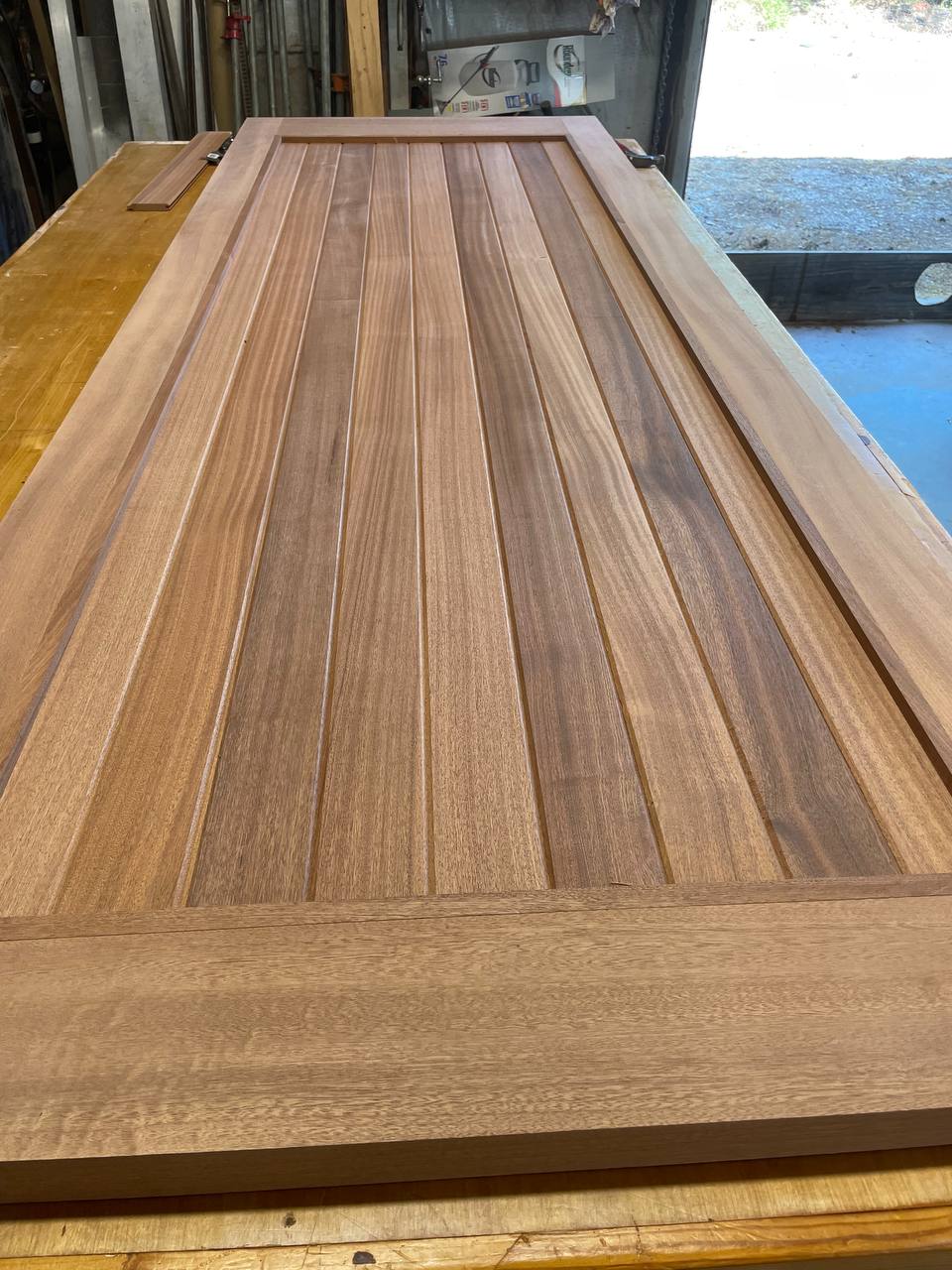
Here's what gets lost in the durability argument. A molded door comes in the sizes the mold comes in. A lot of houses around here — the older ones downtown, the raised cottages, anything that's been added onto twice — don't have openings that match a catalog. And a printed grain pattern looks like a printed grain pattern up close, because it's the same pattern on every door on the street.
A real door is made to the opening you actually have, in the proportions the house was built with, out of a material that has depth to it. Fifty years from now it can still be there, sanded and refinished a few times, looking better than it did new. That's the trade. A little upkeep for something that's genuinely yours and genuinely lasts.
People don't fall in love with a front door because it's low-maintenance. They fall in love with it because of how it feels to walk up to the house.
The short version
- The warnings about wood doors in Charleston are true — about cheap softwood doors
- Dense, naturally rot-resistant hardwood like Sapele is a different product with a different lifespan
- Humidity attacks the wood; salt attacks the hardware. Buy good stainless or bronze
- Every surface gets sealed, edges included. The bottom edge is where early failures start
- Budget a couple of hours of upkeep a year, and refresh the finish before it fails
- Exposed west-facing entry with no cover, or no interest in upkeep? Buy something else
- What wood gives you that nothing else does: your opening, your proportions, and a door that can be repaired instead of replaced
Common questions
Will a wood front door warp or rot in Charleston's humidity?
A cheap softwood door will. A dense, rot-resistant hardwood door that's sealed on all six sides and kept finished won't — there are wood doors on Charleston houses that have been hanging for fifty years and more. What most people have seen fail wasn't wood failing as a material. It was a low-grade pine or fir door, usually with unsealed edges, doing what that product does in air that sits above 70% humidity most of the year.
What is Sapele, and is it the same as mahogany?
Sapele is a West African hardwood and a close relative of genuine mahogany — it's often sold as African mahogany, but it isn't the same wood. It's considerably harder, roughly 1,410 lbf on the Janka scale against about 800–900 for genuine mahogany, and its interlocked grain resists splitting where hinge screws and lock hardware go in. It also carries good natural resistance to decay and insects. For an exterior door in a hot, wet climate, those three traits are the whole argument.
How much upkeep does a wood exterior door really need?
Less than people fear, more than zero. Wipe the salt film off a few times a year with plain water. Look the finish over each spring and fall, especially the bottom rail and the sun-facing side. Refresh the exterior finish when it starts to dull or thin — every few years on a well-covered door, closer to annually on a fully exposed one. That's the honest trade: a Saturday now and then, for a door you repair instead of replace.
Is a wood door a bad idea if my door gets direct sun and rain?
It's the hardest case for it. A west or south-facing entry with no porch roof takes UV and driving rain all day, and it'll want its finish refreshed far more often than a door tucked under six feet of porch. Wood can live there — but only if you're honest about keeping up with it. If nobody in the house is going to look at that door twice a year, it's the wrong purchase, and any woodworker worth talking to will tell you so.
Built for this climate, on purpose
We build handcrafted Sapele entry doors, screen doors, gates and custom woodwork by hand in Ravenel — made to your opening, not to a mold. If you've got a door in mind, tell us about the house.
Request a Custom Piece Custom Doors in Charleston →