
What to Know Before You Order a Custom Wood Door (From Somebody Who Builds Them)
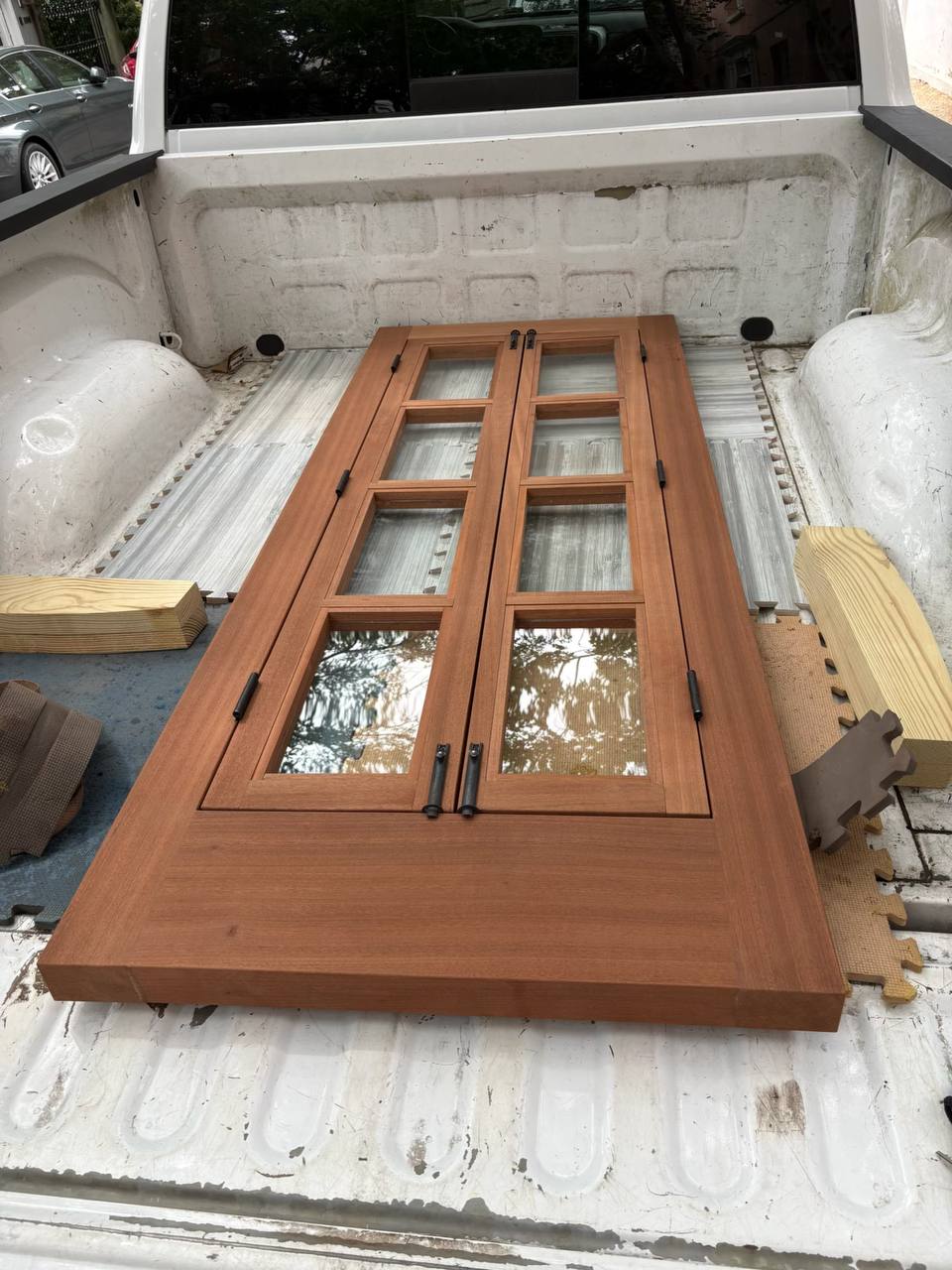
Before you pick a door off a picture and a price, decide five things in order: what the door is up against (sun, rain, salt air, or a sheltered porch), the size and swing for your actual opening, what the glass is for, which wood and why, and the lead time so you can plan around it. Settle those and you'll love the door in ten years — not just the day it's hung.
Most folks ordering their first custom door don't know what they don't know. So they anchor on the two things a website shows them — a photo and a price — and skip the decisions that actually decide whether they still love that door a decade from now.
I've built a lot of doors. And I can usually tell within a couple of questions whether somebody's order is going to go smooth or go sideways. It almost never comes down to taste — people know what they like. It comes down to the boring stuff nobody told them to think about. So here's the list I wish every customer walked in with, in the order I'd ask it, the way I'd lay it out for somebody standing in the shop. None of this is about how a door gets built. It's about what you decide before you order one.
1. Start with what the door is up against
Before style, before wood, before anything: where is this door going to live? A door tucked under a deep covered porch has an easy life. A door on a bare west-facing wall takes direct afternoon sun, driving rain, and — down here in the Lowcountry — salt air on top of it. Those are two completely different jobs.
The exposure decides how much door you actually need. Full sun and weather ask for a tougher build and more upkeep down the road; a sheltered spot gives you more freedom. If you tell a builder "south-facing, no overhang, half a mile from the water," you'll get very different guidance than "under a porch, faces the courtyard" — and you want that guidance before you fall for a design that won't hold up where you're putting it. (If you're anywhere near the coast, I wrote a whole piece on how wood doors really hold up in Charleston's salt air and humidity — worth a read first.)
2. Size and swing, before style
This is the least exciting thing on the list and it's the one that derails the most orders. Before you're picking glass and finishes, nail down the plain measurements:
- The rough opening — the actual hole in your wall, not the size of the old door, which may have been wrong to begin with.
- In-swing or out-swing — which way it opens, and whether that fits your entry, your storm door, and how you live in the space.
- Single or a pair — one door, or two meeting in the middle. It changes the whole look and the whole opening.
- Hinge hand — which side the hinges land on. Sounds trivial. Get it wrong and nothing else matters.
Style is the fun part and it's where everybody wants to start. But a gorgeous door that's built to the wrong opening or swings the wrong way is just an expensive problem. Settle the geometry first, then go have fun with the look.
3. Glass — decide what it's FOR
Almost everybody wants some glass. Fewer people stop to ask what the glass is actually for, and that's the question that should drive the whole decision. Are you after daylight in a dark entry? A view out to something worth looking at? Or do you just like the look of glass in a door?
Those three answers point at different doors. Chasing light means glass up high where it spills into the room. Chasing a view means glass where you actually stand. Chasing looks alone means you can be choosier and keep more privacy. Because that's the trade every piece of glass makes: light and view in one direction means people can see in from the other. Decide the why first, and the how-much and the where sort themselves out — along with how much of your entryway the neighbors get to see.
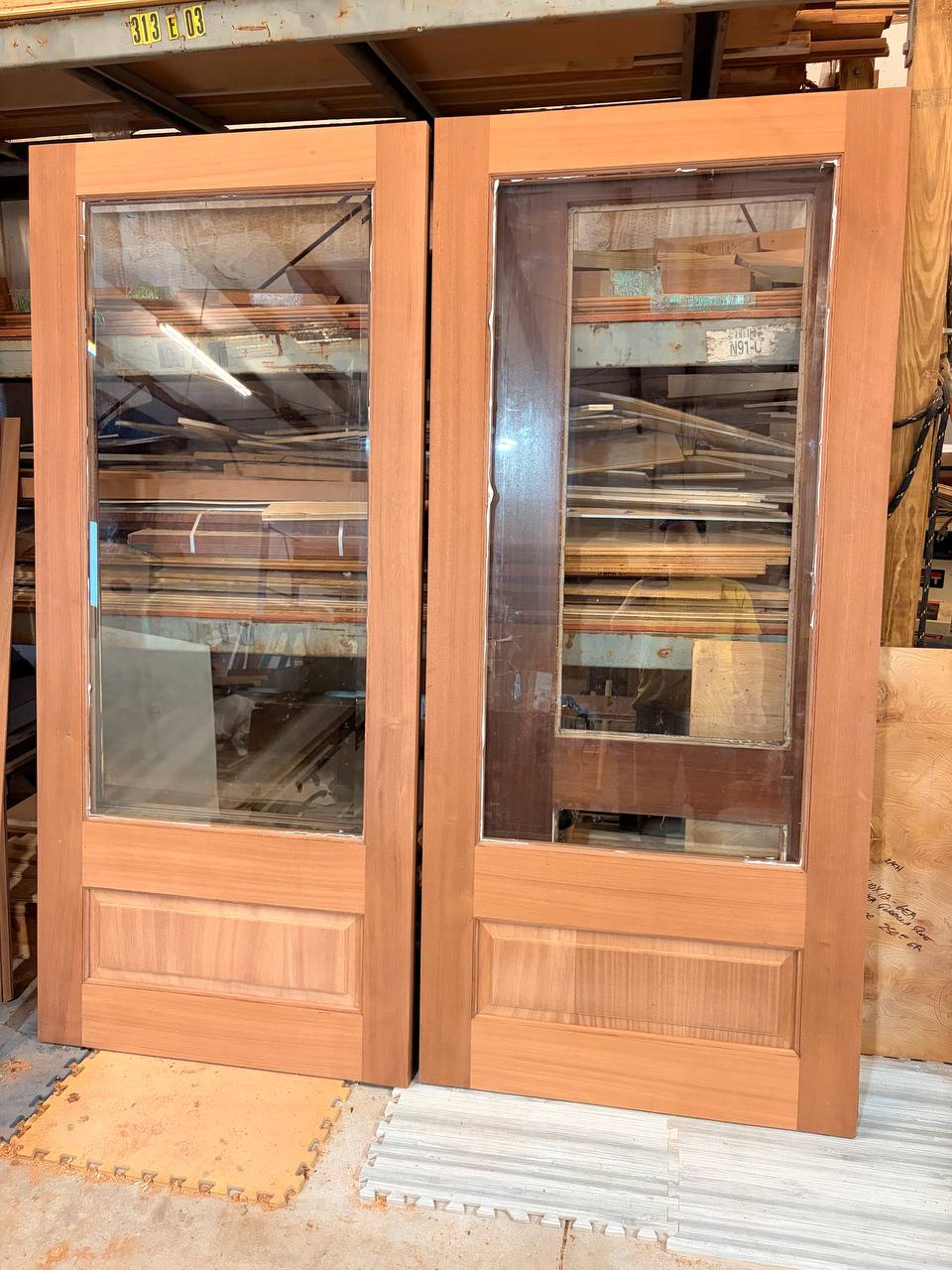
4. The wood is a decision, not a default
Here's where a lot of first-time buyers glaze over, and it's the part that decides how the door behaves for the rest of its life. Wood is not just wood. A stable hardwood stays put when the weather swings from wet to dry and back — which is what an exterior door does every single day. A bargain softwood moves. And a door that moves is a door that sticks in summer, gaps in winter, and eventually warps.
You don't need to become a lumber expert to order a door. But you do need to treat the species as a real choice and ask why the builder uses what they use. The right wood is the difference between a door that stays flat and true for decades and one that fights you every humid month. (If you want the deeper version of why doors move, I laid it out in how to keep a wood door from warping.) Pick the wood on purpose. It's not a detail — it's the foundation.
5. Lead time is real — ask before you plan
This is the one nobody wants to hear and the one I'll be straightest about: a real custom door takes weeks, not an afternoon. It is built to your opening, cut and shaped and finished by hand, and that takes the time it takes. Across the trade, true custom exterior doors commonly run somewhere in the neighborhood of eight to twelve weeks depending on the shop's backlog, the design, and the glass and hardware you choose.
I'm giving you that range so you can plan, not as a quote — every shop is different and every door is different, so ask for the current lead time up front. The mistake I see is people who wait until they need the door now — a closing date, a party, a rotted-out slab they can't ignore — and then they're disappointed that handmade doesn't happen overnight. Don't do that to yourself. Ask the timeline, then order before you need it. A custom door is worth planning around; it is not worth rushing into a builder who promises it too fast.
6. What "custom" should actually get you
Put those five together and you land on the real reason to buy custom in the first place. A custom door isn't just a fancier version of the thing on the big-box pallet. It's a door built to your opening, for your exposure, in the wood that suits your climate, with the glass doing the job you actually need it to do. Nothing about it is a compromise you accepted because it was the closest size in stock.
That's what you're paying for, and it's what to hold a builder to. Not a size that's "close enough," but a door that fits your house like it grew there. If you walk in having thought through exposure, size and swing, glass, and wood — and you've asked the lead time honestly — you're not just ordering a door. You're going to end up with the right one.
Common questions
What should I know before ordering a custom wood door?
Settle five things, in order: what the door is up against (sun, rain, salt air, or a sheltered spot), the size and swing for your actual opening, what the glass is really for, which wood species and why, and the lead time so you can plan around it. A door is a ten-year decision — decide those up front and you'll love it long after you've forgotten the price.
What questions should I ask before buying a custom entry door?
Ask what wood species is used and how it holds up in your climate; ask about the rough opening, the swing direction, and single vs. a pair; ask what the glass is for and how much privacy you trade for it; and ask the lead time before you commit to any date. A builder who answers those plainly is one worth buying from.
How long does a custom wood door take to make?
Weeks, not an afternoon. Across the industry, true custom exterior doors commonly run somewhere in the range of eight to twelve weeks, depending on the shop's backlog, the design, and the glass and hardware. The honest move: ask for the current lead time up front, and order before you need it — not the week you want it hung.
Does the wood species really matter on an exterior door?
More than almost anything. A stable hardwood stays put through wet-then-dry swings; a bargain softwood moves, and a door that moves sticks, gaps, and warps. The species sets how the door behaves for its whole life — in a humid, salt-air climate especially, it's the difference between a door that lasts decades and one that fights you every summer.
Thinking about a custom door? Start with a conversation.
A door is a decision you live with for years — so start it by talking to somebody who'll build it to your opening and your climate, not a size off a pallet. That's what we do by hand here in Ravenel. Tell us what you're picturing.
Request a Custom Door More from the bench →