
Why a Handmade Wood Gate Outlasts a Store-Bought One
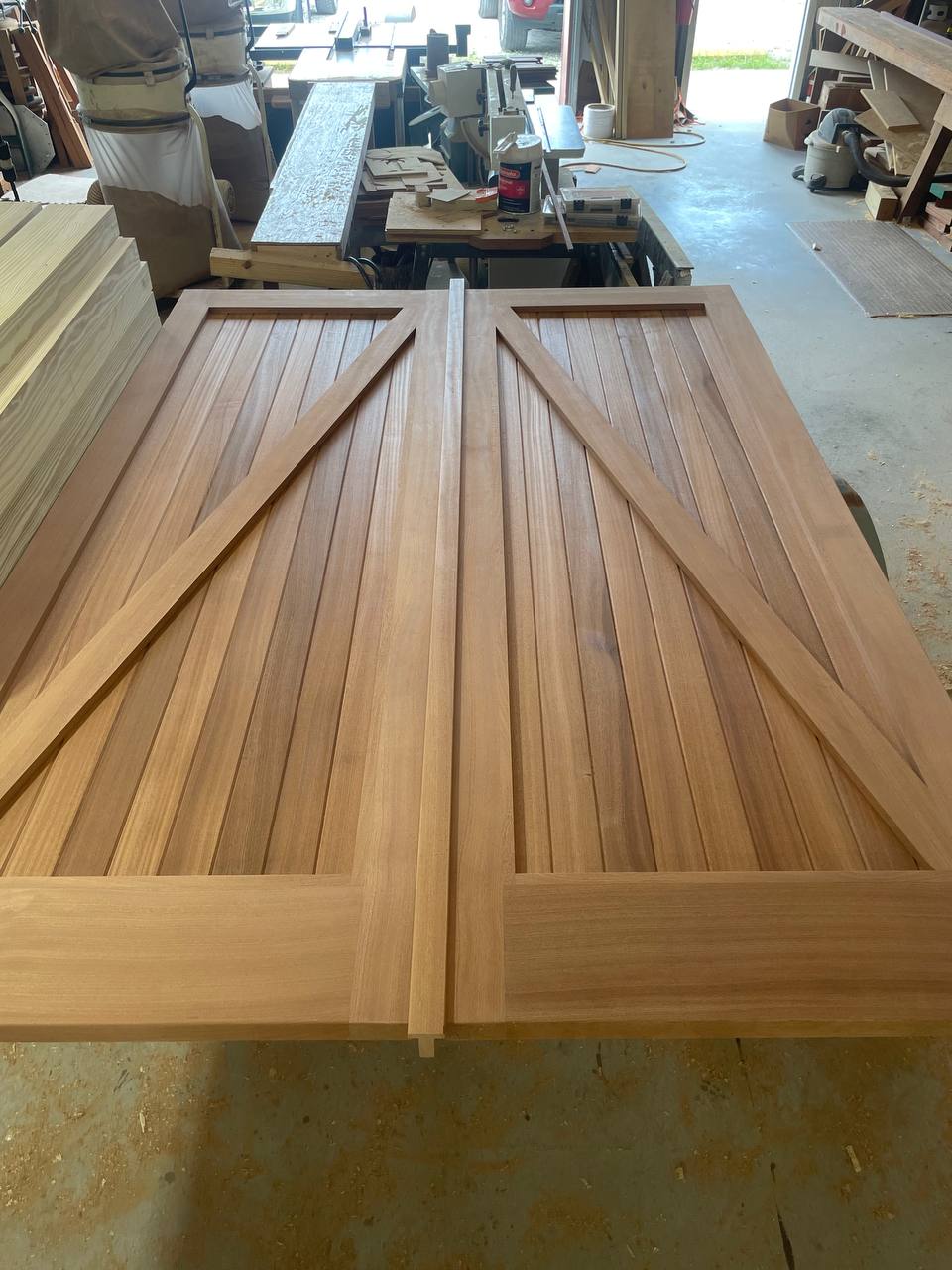
A well-made custom wood gate can go twenty years or more and still swing true. A store-bought gate often starts sagging within a few years. The difference comes down to two things: the wood underneath and what holds the corners square. It is almost never the paint, and it is almost never the price tag on the tag.
Nearly everybody has owned the cheap gate. You hang it on a Saturday, it looks fine for a season or two, and then one day you notice you have to lift it to get it to latch. That is not bad luck. That is how it was built.
I get calls about gates every fall, and the conversation starts the same way: our gate is dragging again. So here is what actually goes wrong on a mass-produced gate, what a good one looks like from the outside, and whether spending once is worth it. I am not going to tell you how we build ours. I am going to tell you what to look at, so you can judge any gate you are about to pay for, ours included.
What actually goes wrong with a store-bought gate
A gate lives a harder life than anything else on your property. It hangs off one edge, it gets slammed, it sits out in the sun and the rain, and you touch it every day. A gate built to a price point does not have much left over for all that.
- It sags, because a gate is a rectangle fighting gravity. Hang any rectangle off one side and gravity starts pulling it into a leaning shape. Whatever holds those corners square is the only thing arguing back. On a cheap gate the corners are the first thing to give, and once they do, the gate racks out of square, the latch quits lining up, and the bottom corner drags the ground.
- The stock is thinner than it looks. A lot of what sits in the big-box gate aisle is light, fast-grown softwood, some of it finger-jointed and painted over. Paint hides a great deal. Two seasons outdoors and the wood tells the truth: soft spots, splits at the fasteners, grain lifting.
- It was built for a size that is not your size. Stock gates come in a few widths and most openings are not those widths, so people shim a gap, trim a stile that was never meant to be trimmed, or just live with it. All three shorten its life.
- The hardware is undersized. Light hinges on a gate that gains weight every time it rains are a slow-motion problem. The hinges give, the post leans, and everybody blames the gate.
What a gate built to last looks like from the outside
You do not need to be a woodworker to size up a gate. Here is what I would look at if I were the one buying.
- Real hardwood, all the way through. Pick up a corner if you can. A good gate has heft. Look at the end grain and the edges, not the painted face.
- It is square, and it stays square. On flat ground it should sit flat, not wound or twisted. Push one corner and see whether anything moves.
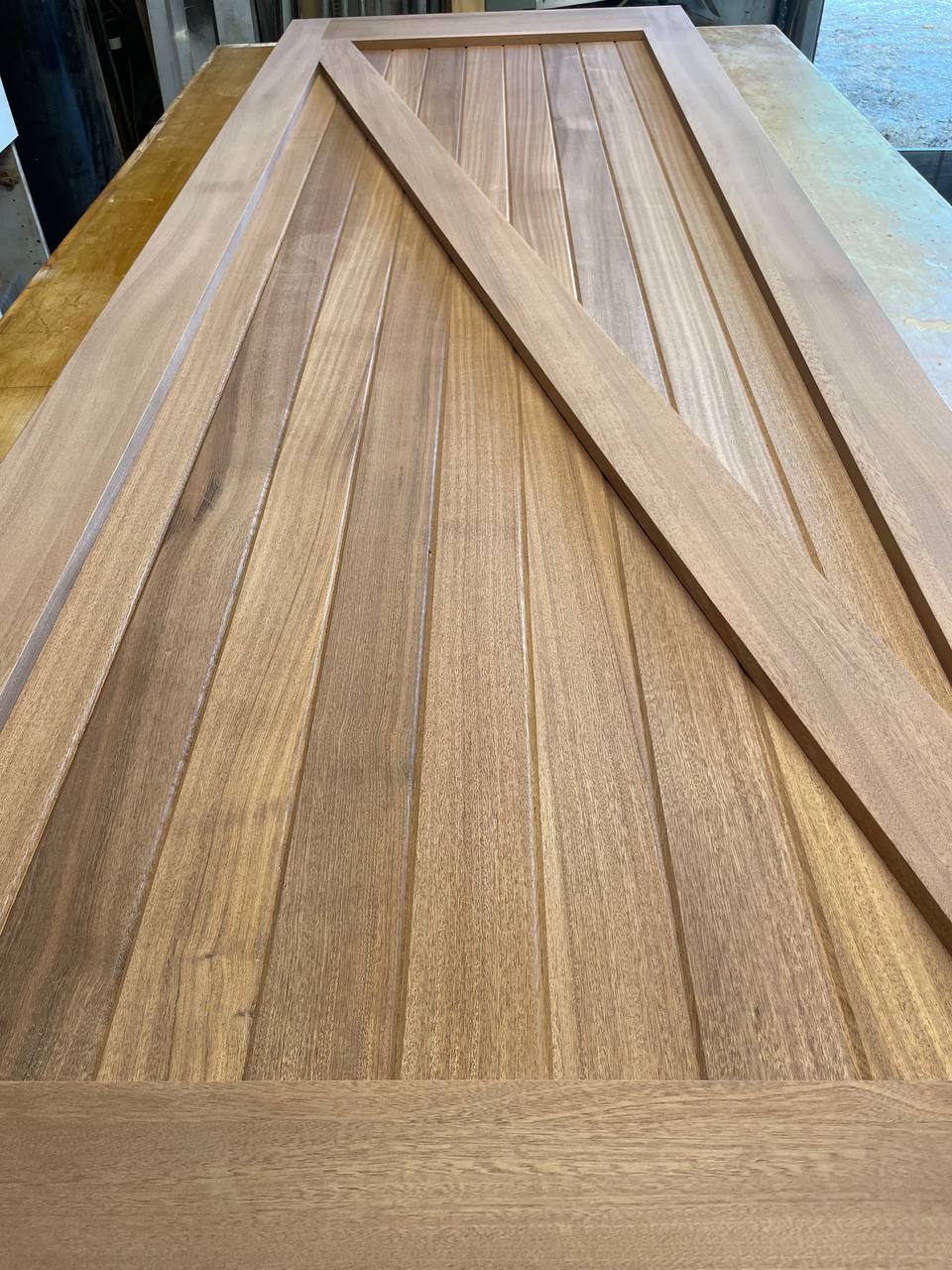
- There is something holding the shape. Every gate that lasts has an answer to the sagging problem built into it. You do not have to know the method. You just have to ask what keeps it square, and get a straight answer.
- Hardware sized to the weight. Heavy gate, heavy hinges, and a post that can carry it. This is the cheapest place to get it right and the most expensive place to get it wrong.
- A finish you can maintain. A gate you can re-oil in an afternoon will outlive one sealed under a coating you cannot touch up.
Why wood still beats vinyl and hollow metal
I will be honest: vinyl and aluminum gates have a place. If you want something you will never think about again and do not much care how it looks, buy one. Most people who call me want the gate to be part of the house, not an accessory bolted onto it.
- Wood can be repaired. Vinyl cannot. Crack a vinyl rail and you replace the panel. Ding a wood gate and it sands out. Twenty years in, that is one gate instead of three.
- Hollow metal dents, and it stays dented. It also gets hot enough in a Carolina July that you would rather not touch it.
- Good wood ages better than it starts. Vinyl chalks and yellows. A hardwood gate with finish on it deepens, and it reads as quality from the street, which is worth something at resale and worth something every day you come home to it.
The real cost math
Here is the part nobody runs the numbers on. A store-bought gate is cheaper the day you buy it. That is the whole argument for it, and it is a real one. But a gate that sags in year four does not just cost you another gate. It costs you the hardware again, the afternoon again, and usually a post repair in the middle of it. Buy that gate three times across fifteen years and you are at or past what the good one would have run, except you spent fifteen years looking at a crooked gate.
I tell people the same thing I tell them about doors. If you are moving in two years, buy the cheap one, and I mean that. If this is your house, buy the one that will still be right when the kids are grown. Same logic as ordering a custom door, and the same reason we build in Sapele.
What to ask before you order one
Whoever you buy from, have these answers first. If a seller gets cagey on any of them, that tells you something.
- What is the actual opening? Measure post to post at the top, middle, and bottom. Posts lean. The number you need is the smallest of the three.
- Which way does it swing, and into what? Uphill ground, a driveway slope, or a car parked close all change what works.
- How exposed is it? Full afternoon sun, sprinkler spray, and salt air are three different jobs.
- What wood is it, by name? Not "hardwood." The species. If nobody will name it, assume the cheapest thing that holds paint.
- How much privacy do you want? A solid gate and an open-picket gate are different pieces. Easier to decide now than later.
Gates in the Lowcountry
Around here the weather does the testing for you. Wet spring, hard sun all summer, salt in the air near the water, and that stretch of humidity that makes everything swell. A gate feels all of it, because unlike a front door it has no roof over it and no conditioned air on the back side. That is why a gate that holds up in Ohio can go crooked in two seasons in Charleston County. Same problem we get into with salt air and humidity on doors, only harsher.
The honest version: a cheap gate is not a mistake if you know what you are buying. It is a mistake when somebody sold it to you as the same thing as the good one. It is not. A gate built out of solid hardwood, sized to your opening and hung on hardware that can carry it, will still be latching right long after you have quit thinking about it. That is what we build in Ravenel, one at a time, by hand.
Common questions
Are custom wood gates worth the money?
If you plan on staying put, yes. A store-bought gate is built to a price and it shows up a few years later as sag, loose corners, and paint lifting off soft stock. A gate built out of solid hardwood and sized to its opening can still be swinging true twenty years later. Buy the cheap one and you are likely buying it again, and probably a third time, plus hardware and the afternoon it takes to hang each one. Spread over those years, the custom gate is usually the cheaper gate.
Why does my wooden gate sag?
Because a gate is a rectangle hanging off one edge, and gravity is trying to pull it into a leaning shape every minute of every day. Whatever holds the corners square is the only thing standing in its way, and on a mass-produced gate that is the weak point. Once the corners give, the gate racks out of square, the latch stops lining up, and the bottom corner drags. Weight makes it worse: a gate too heavy for its hinges or its post will pull itself crooked no matter how well it was made.
How long should a good wood gate last?
A gate made from solid, stable hardwood, hung on hardware sized to its weight, and given a coat of finish every few years should give you twenty years or more and still latch the way it did on day one. Big-box gates are a different animal. Most start showing sag or soft spots within three to seven years outdoors, sooner in full sun or where they get soaked every afternoon. The wood and the corners decide this, not the paint.
Do you build gates to a custom size?
That is the main reason to come to us. Stock gates come in a handful of widths, so most people end up shimming a gap or trimming a gate that was never meant to be trimmed. We build decorative wood gates to the opening you actually have, in the style you want, out of Sapele or another solid hardwood. Tell us the opening, the swing, and how much privacy you want. We are in Ravenel, just outside Charleston, and the gate is ready to hang when you pick it up.
Want a gate that still swings true in twenty years
We build custom wood gates, doors, and decorative work by hand in Ravenel, sized to your opening and made out of wood worth the trouble. Tell us what you are picturing and we will tell you straight whether we are the right shop for it.
Request a Custom Piece More from the bench