
Why Sapele? The Wood Behind a Door That Actually Lasts
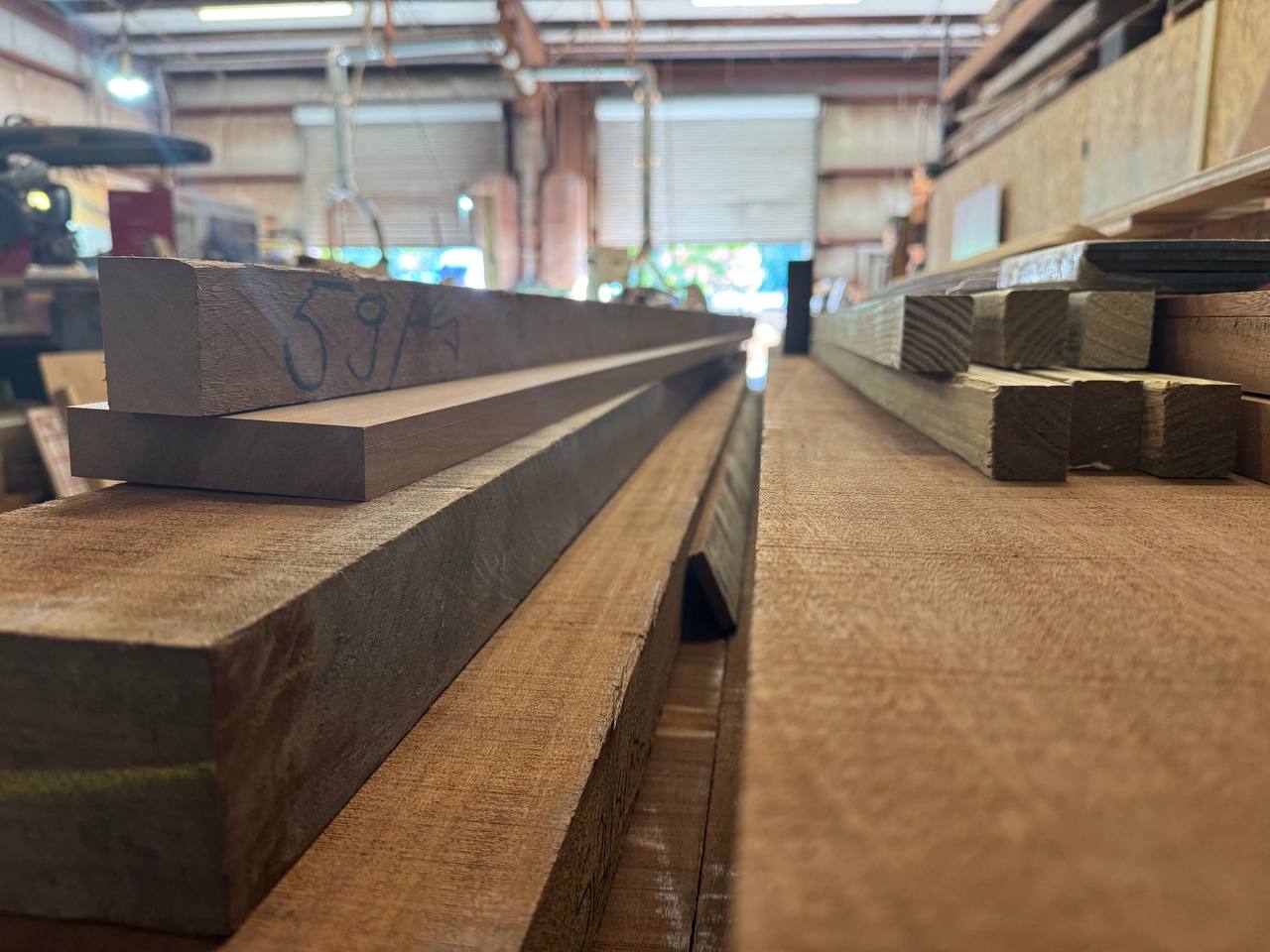
Sapele is a dense, tight-grained African hardwood — golden to deep reddish-brown, harder and far more stable than the softwood most exterior doors are made of, and moderately-to-very rot resistant. That combination is the whole reason a sapele door stays flat, stays shut, and lasts decades in a wet, salty climate where a cheap door swells, sticks, and rots at the bottom. It's not the cheapest wood on the rack — it's the one that's still hanging straight twenty years from now.
The question I get on nearly every job, standing in a doorway with a customer: "What kind of wood is that?" It's sapele. And the reason we build with it isn't a spec sheet — it's what that wood does once it's hung.
Anybody can copy a hardness number off a website. What I can tell you, after thirty-some years of working wood every day, is what those numbers actually feel like at the bench and on the house. So let me give you the honest read on sapele — what it is, why it holds up where a box-store door doesn't, and where it's not the right call. If you're shopping a real exterior door, this is the wood behind the decision.
What sapele actually is
Sapele (you'll see it spelled sapelli, and pronounced suh-PEEL-ee around here) is an African hardwood — Entandrophragma cylindricum, if you want the Latin. It's what a lot of the trade turned to as the modern successor to genuine mahogany, back when real Honduran mahogany got scarce, restricted, and expensive. A good bit of what gets sold as a "mahogany door" today is actually sapele.
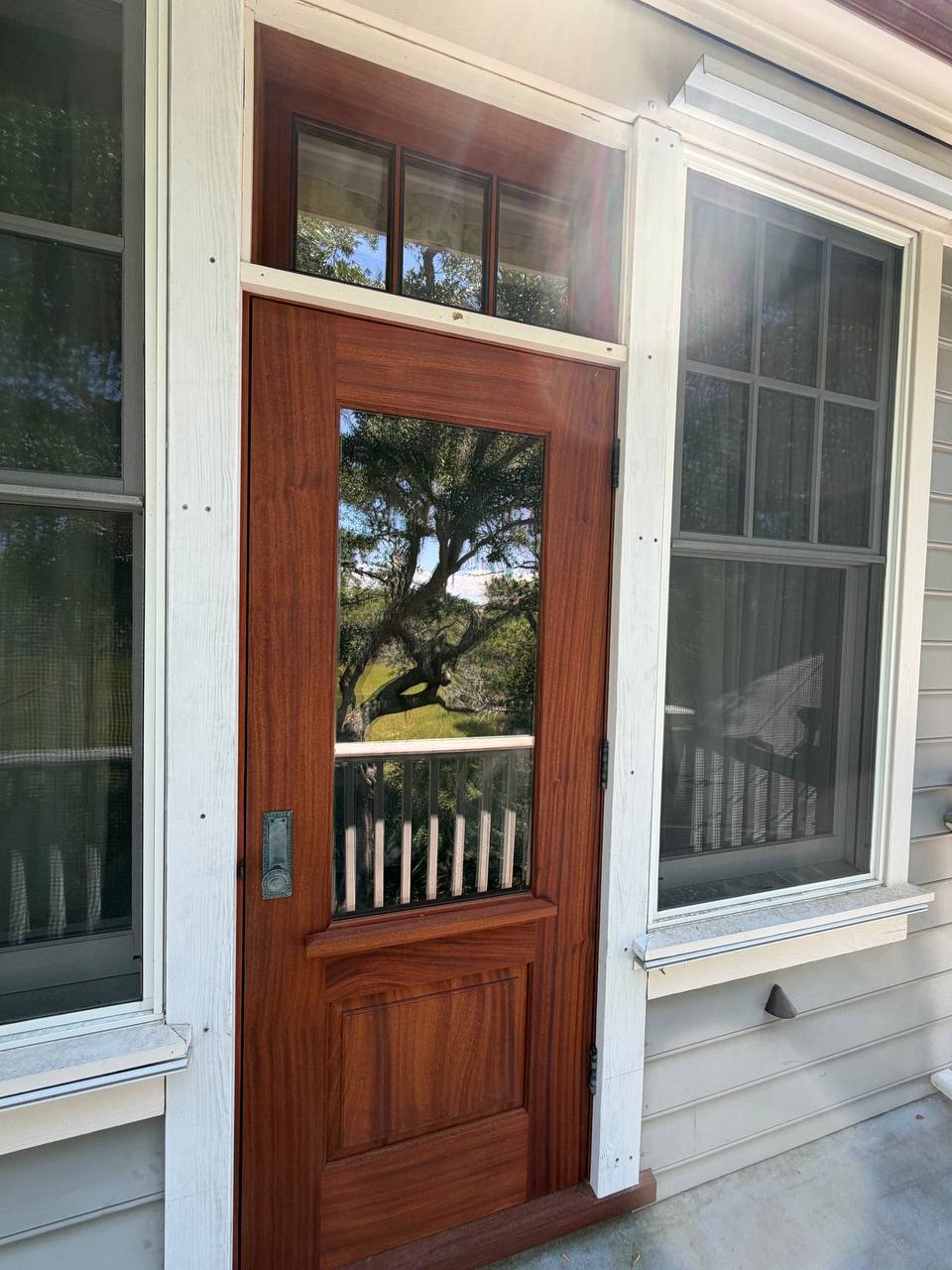
It runs a golden-to-reddish brown that deepens with age, and on quartersawn boards it throws that gorgeous ribbon stripe that catches the light as you walk past it. One thing worth knowing up front, so it's not a surprise: it darkens over the first year or two. That's the wood, not a defect — and most folks end up loving it more for it.
Why it holds up where cheap doors fail
Three things make sapele the right wood for a door, and they're all things you can feel, not just read. Here they are in plain language.
- Hardness. Sapele runs about 1,360 on the Janka scale — the standard measure of how hard a wood is. That's harder than red oak, and it's in a whole different league from the pine and finger-jointed softwood a big-box door is built from. It takes knocks, weather, keys, dogs, and decades of a screen door banging into it without looking beat up.
- Stability. This is the one that matters most for a door. Sapele is dense — around 42 pounds a cubic foot — with an interlocked grain, so it moves less as the seasons swing. Less movement means less swelling, and less swelling is the difference between a door that keeps swinging and latching all summer and one that sticks shut in July. (More on that fight in my piece on keeping a wood door from warping.)
- Rot resistance. The heartwood ranges from moderately durable to very durable against decay — that's the wood's own natural defense. Pair that with a real finish, and you've got a door that doesn't rot out at the bottom rail the way a soft, thirsty door does. (I walk through finishing outdoor wood right the right way here.)
Sapele vs. the alternatives — the honest comparison
I'd rather you understand the trade than take my word for it, so here's how sapele stacks up against what else you might be shown.
- vs. genuine mahogany. You get most of the same look — the warm color, the ribbon figure — and sapele is actually harder (roughly 1,360 versus 800 to 900 for true mahogany), without the cost and scarcity that come with real mahogany today. For a working exterior door, sapele is the smarter buy, not the consolation prize.
- vs. red oak. Oak's a fine furniture wood, but look at the end of an oak board and you'll see open pores you could nearly stick a straw into. Those pores drink moisture. Outdoors, in our air, that's the wrong choice — it's why oak belongs in your dining room, not on your porch.
- vs. the box-store softwood door. Cheaper the day you buy it, no argument. But it's soft, it's thirsty, and in a few seasons of Lowcountry humidity it swells, sticks, and starts to fail at the bottom. You save money once and pay for it every summer after.
What sapele is NOT — I'll say it plainly
I'm not going to sell you a wood by pretending it's perfect. Here's the honest side:
- It's not cheap. Sapele is a premium material and it prices like one. For a door that has to last decades outdoors, that's exactly the point — but it's a real number, and you should know it going in.
- It's not the lightest door to hang. That density that keeps it flat also makes it heavy. It wants good hinges and a solid jamb, which is part of building it right.
- It darkens. Over the first year or two it deepens in color. Some folks want that rich, aged look from day one and are thrilled; if you're expecting it to stay the exact shade it was the afternoon it went up, it won't.
None of that scares off the right buyer. If anything, being straight about it is what makes the rest believable — a premium wood that has to earn its keep outdoors, and does.
Living with a sapele door
The upkeep is about as easy as it gets for real wood. A sapele door wants an occasional wipe-down to keep the grime off, and a fresh coat of finish when the old coating starts to dull or look thirsty — same idea as re-oiling a good cutting board, just on a door's schedule. That's owner maintenance, nothing more. Keep the finish alive and the wood does the rest. It's the same reason a sapele door shrugs off our climate in the first place — I dug into the salt-air question specifically in do wood doors hold up in Charleston.
That's sapele. It costs more, it weighs more, and it deepens with age — and in return you get a door that stays flat, stays shut, and still looks like something worth having twenty years on. For a front door, that's the trade I'd make every time.
Common questions
Is sapele good for a front door?
Yes — it's one of the best woods you can put on an exterior door. It's dense and tight-grained, harder than red oak (around 1,360 on the Janka scale) and far harder than the softwood most box-store doors are built from. That density, plus an interlocked grain that resists moving with the seasons, is exactly what a front door needs: it stays flat, stays shut, and takes decades of weather. The heartwood is naturally rot resistant too, so with a real finish it holds up where a soft, thirsty door rots out at the bottom.
Is sapele the same as mahogany?
No, but they're close cousins, and sapele is often called the modern successor to genuine mahogany. Real Honduran mahogany is scarce and pricey now, so a lot of what's sold as a "mahogany door" is actually sapele. You get most of the same warm, reddish-brown look and the ribbon figure on quartersawn boards — and sapele is actually harder than genuine mahogany. For a door that works outdoors, that extra hardness is a real advantage.
Does sapele hold up in humid, salty climates?
It's about the best wood there is for it. The enemy of a wood door down here is moisture moving in and out — that's what makes a door swell, stick, and rot. Sapele is dense with an interlocked grain, so it moves less with humidity than almost anything else you'd hang, and the heartwood is naturally rot resistant. Kept sealed and re-finished when the coating dulls, a sapele door stays flat and keeps latching through summers that swell a cheap door shut in a season or two.
Why does my sapele door look darker than when it was new?
That's the wood doing exactly what it does — not a defect. Sapele naturally darkens and deepens with age and sunlight, moving from a golden reddish-brown toward a richer brown over the first year or two. Most owners come to love it; it's part of why a real hardwood door looks better in five years than the day it was hung. Keeping it out of relentless direct sun and using a finish with UV protection slows it down, but you won't stop it entirely — and you probably won't want to.
Now you know the wood. Let's talk about the door.
We build handcrafted sapele doors, screen doors, gates, and custom woodwork by hand here in Ravenel — made to stay flat and last decades in Lowcountry weather. Tell us what you're picturing.
Request a Custom Piece See What We Make